

Temporarily Closed
Under Renovation

Home / Attractions / Cherokee Heritage Center
For over half a century, Cherokee Heritage Center has stood as a guardian of Cherokee history, culture and tradition — preserving the past and inspiring future generations. It has served as the official repository of culture and history for the Cherokee people, while also educating and entertaining guests from around the world.
Together, Cherokee Nation Principal Chief Chuck Hoskin Jr., Deputy Chief Bryan Warner and the Council of the Cherokee Nation enacted the Cherokee Heritage Center Act in 2020, laying the groundwork for the tribe to take ownership of the 44-acre campus. Work began immediately to reimagine the center, aligning with Cherokee Nation’s cultural tourism efforts to share the authentic Cherokee story and establish the Cherokee Heritage Center as a destination of choice for tribal citizens, community members and visitors.
‘‘
In September of 2025, the reconfigured Cherokee National Historical Society presented its $50 million proposal for the heritage center’s future. With the Council’s unanimous support, Chief Hoskin and Deputy Chief Warner signed the amendment, one day short of the five-year anniversary of the 2020 act.
Construction of the new Cherokee Heritage Center is funded through a special dividend from Cherokee Nation Businesses, with completion slated for 2029.


Designed with Purpose
The forested site of the former First Cherokee Female Seminary is entering a new era, serving as the foundation for a renewed telling of Cherokee history, culture and identity.
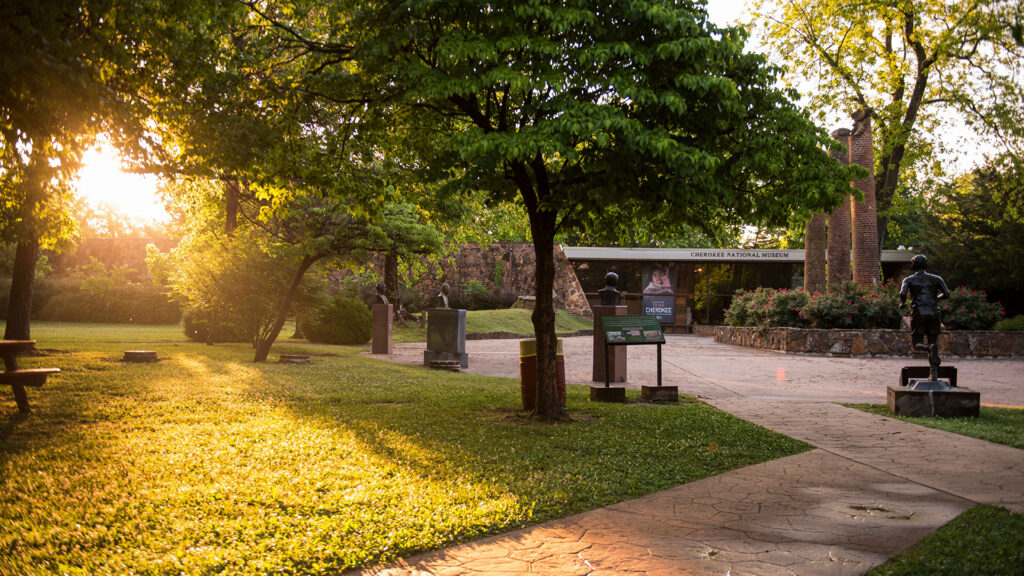
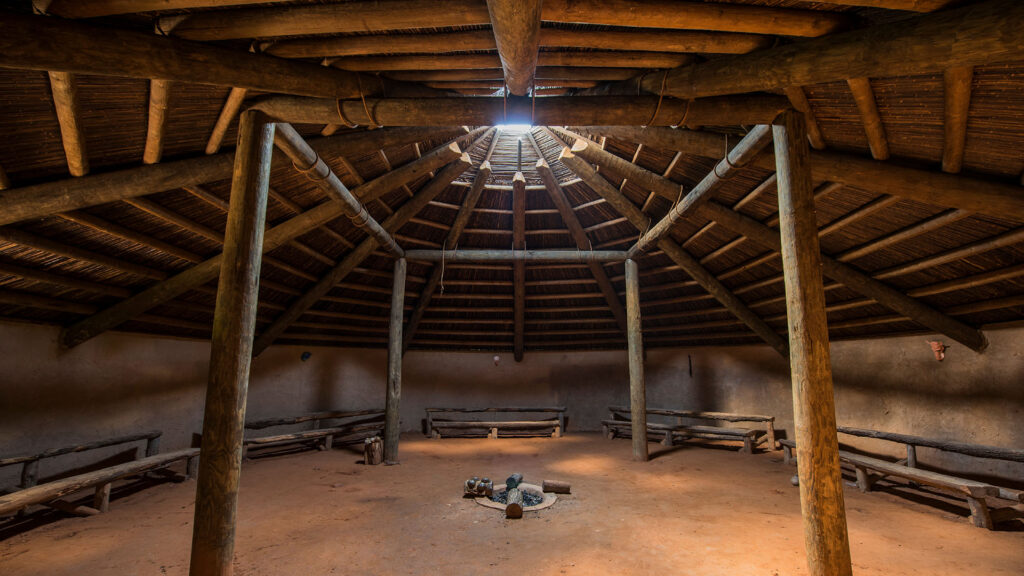
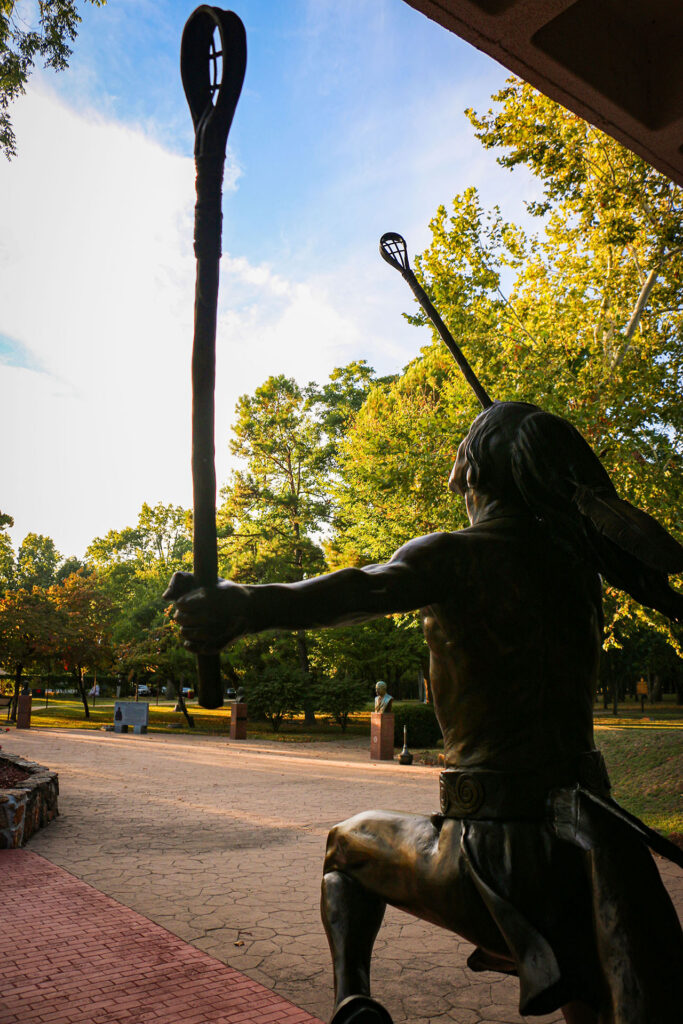
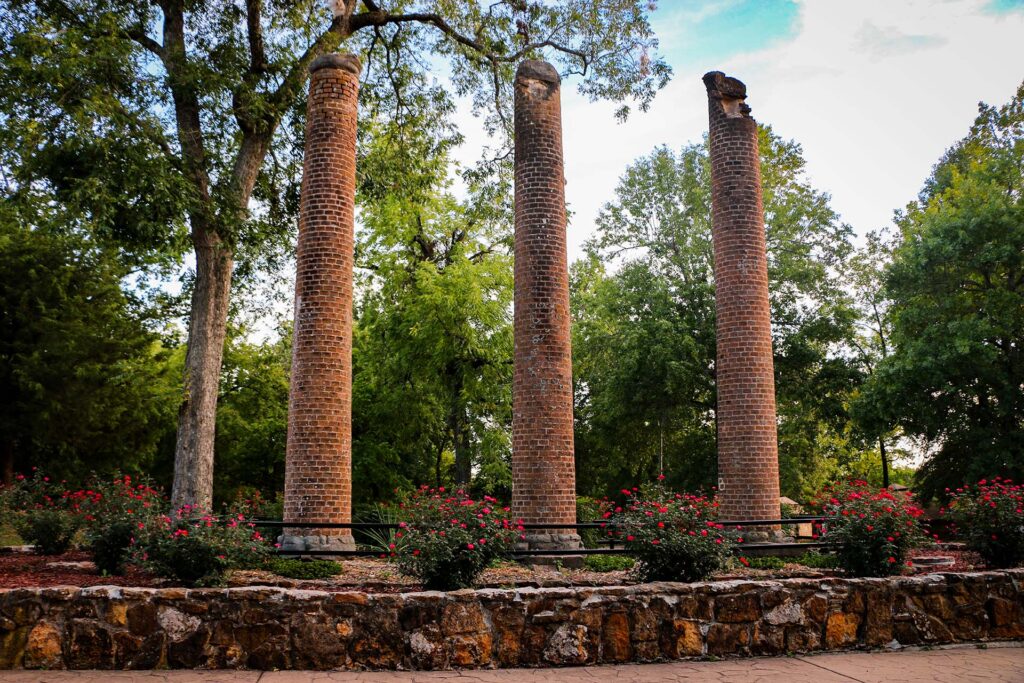
Currently, the 44-acre property features historic columns from the seminary, a museum, historic log cabins, a chapel, a reconstructed 1710s village and remnants of the Tsa-La-Gi outdoor amphitheater — each representative of different moments throughout Cherokee Nation’s story. It also holds the collective memory of generations of Cherokee citizens who have gathered here to honor their heritage.
The proposed project, to be built in phases, begins with a new museum featuring permanent and rotating galleries, a Cherokee National Treasure gallery, classroom and program space, a gift shop, a grab-and-go café and terrace amphitheater. Additional phases include a new research center to foster access to Cherokee Nation’s rich archival and cultural collections and genealogical services.
In a series of buildings, nestled within the tree line, the heritage center site is connected by a crescent-shaped stream bed that traverses the site and is fed by rainwater. At the center of the site stand the three remaining columns from the first Female Seminary, creating a place to gather and commemorate a legacy.
Cherokee culture is woven throughout the design, including standout features such as the pattern of skylights on the tallest structure paying tribute to Cherokee Nation’s seven-pointed star.
The beloved Tsa-La-Gi Amphitheater is overlooked by a cantilevered platform that extends over the historic venue, inviting memories of past performances and honoring the people who shaped the legacy of the site.
Together, we are embarking on a journey to reimagine the Cherokee Heritage Center for the next seven generations.
CHEROKEE HERITAGE CENTER ACT of 2020
The monumental legislation, authored by Cherokee Nation Principal Chief Chuck Hoskin Jr. and Deputy Chief Bryan Warner, was unanimously approved by the Council of the Cherokee Nation on Sept. 24, 2020. Through the act, the existing Cherokee National Historical Society organization dissolved, and all assets, including the iconic Cherokee Heritage Center, were transferred to the Cherokee Nation. The legislation also created a new Cherokee National Historical Society under the laws of the Cherokee Nation. Cherokee Nation citizens were appointed by the executive, judicial and legislative branches to provide critical oversight and guidance for the Cherokee Heritage Center and its holdings.
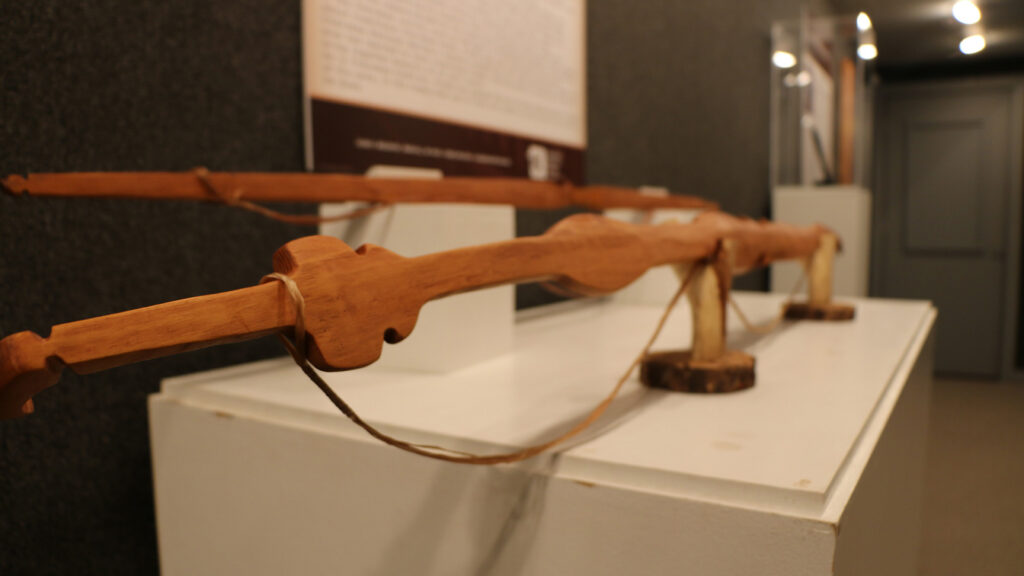
During assessments, the Cherokee National Archives were declared in a state of emergency by the Council of the Cherokee Nation. This was due to the aging infrastructure and need for updated environmental controls. Subsequently, Cherokee Nation Businesses began working on a temporary new home for the cultural collections and archives. Opened in 2021, the Cherokee National Research Center serves as a temporary home to the tribe’s collection of thousands of Cherokee artifacts and archives formerly housed at the Cherokee Heritage Center.
History
The Cherokee Heritage Center’s story originated with the establishment of the Cherokee National Historical Society in 1963, which was incorporated as an educational nonprofit in 1964 to preserve, promote and teach Cherokee history and culture.
Cherokee Nation citizen Charles “Chief” Boyd presented a concept to the Cherokee National Historical Society board for an unnamed cultural center to be built within the heart of the Cherokee Nation in Park Hill, Oklahoma.
The chosen site was on the grounds of the original Cherokee Female Seminary, which was one of the first institutions of higher learning specifically established to educate women west of the Mississippi River. The seminary was lost to a fire in 1887, but three historic columns remain onsite as a historical marker.
The Cherokee Heritage Center opened to the public in 1967 with the debut of its ancient village, followed by the amphitheater in 1969 and the museum in 1974.